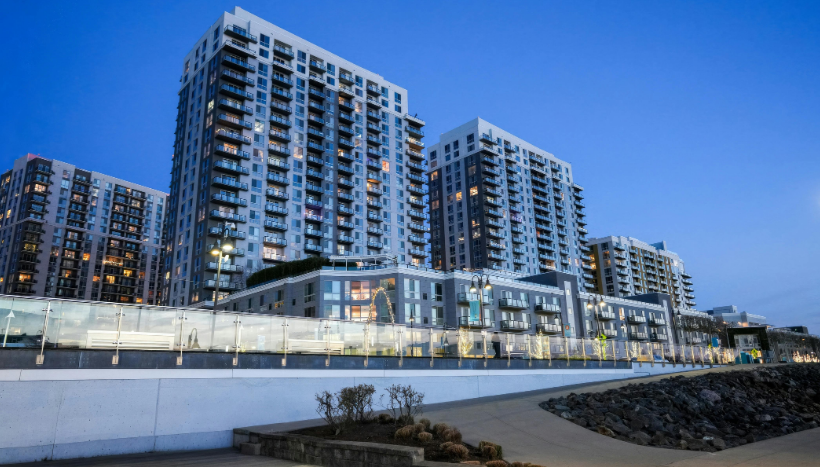

The concept of luxury apartments has undergone a quiet transformation in recent years. A prime location and refined finishes still matter, but they are no longer enough to define what the market considers high-end.
Today, a luxury property is also an asset, and understanding this segment requires the same level of sophistication as analyzing any other class of investment. This article explores what truly defines this type of property, how it performs in Brazil and abroad, and why the financial structure behind a high-end real estate transaction is just as critical as the development itself.
For those who take this market seriously, the infrastructure that supports these operations is no longer a minor detail; it has become a key differentiator.
What is a luxury apartment?
The question seems simple, but the answer is more structural than aesthetic. A luxury apartment It is not defined solely by the price per square meter or the shine of the marble in the entrance hall. It is the result of a combination of objective factors that, together, create a value proposition that is difficult to replicate.
The first and most decisive factor is the location. Well-established neighborhoods, with high-quality urban infrastructure, access to premium services and a history of consistent appreciation create a floor for demand that protects the value of the property over the long term. It is not because of chance that the most coveted addresses in São Paulo, Miami or Lisbon are better able to withstand adverse economic cycles.
The constructive standard is also non-negotiable. Home automation systems, energy efficiency, high ceilings, spacious balconies, and top-quality materials are technical features that high-end buyers evaluate even before visiting the property. Developers with a proven track record of delivering projects build this intangible asset over decades.
In addition, exclusivity and scarcity are real pricing factors in this segment. Developments with a limited number of units, controlled access, concierge services, and restricted-use common areas create an experience that goes beyond square footage, and it is precisely this experience that the savvy investor is willing to pay for.

How is the luxury real estate market faring in Brazil and abroad?
The luxury real estate market in Brazil is concentrated in a few major urban centers: São Paulo, Rio de Janeiro, and Balneário Camboriú lead in terms of volume and appreciation.
Historically, the luxury segment has shown greater resilience than the conventional market during times of crisis, in part because its typical buyer relies less on credit and has a longer investment horizon.
Mas o olhar do investidor sofisticado já extrapola as fronteiras nacionais há alguns anos. A Florida, particularly Miami and Orlando, has established itself as the preferred destination for Brazilians looking to invest in the U.S. real estate market.
The combination of liquidity, legal certainty, and appreciation potential makes the region a benchmark for those considering real estate investment abroad.
Portugal continues to serve as a gateway to the European market, with São Paulo and Lisbon increasingly linked by flows of capital and talent. Meanwhile, Australiais emerging as a market of interest to investors seeking geographic diversification combined with institutional stability.
Segundo o Knight Frank Wealth Report, publication annual of global reference on luxury markets, the demand for premium real estate in mature markets tends to show less volatility precisely because it is anchored in fundamentals structural, not in cycles of credit. This fact is relevant for any analysis serious of allocation in this segment.
The growing interest of Brazilian investors in international markets, however, brings with it a requirement that is often underestimated: the need for adequate financial and operational structures to facilitate these cross-border transactions.
Geographical barriers can be overcome, but not without a legal framework, compliance and a well-defined distribution infrastructure.
Apartments can be a good investment opportunity?
There is a fundamental difference between purchasing a luxury property for personal use and structuring an investment transaction based on a luxury development.
In the first case, the buyer evaluates comfort, location, and perceived value. In the second, the investor analyzes cash flow, legal structure, traceability, and governance of the operation.
Lease agreements for commercial propertiesBuilt-to-Suit (BTS) are a good example of this distinction. A logistics warehouse or corporate space custom-built for a specific tenant can generate income for an investor for 10, 15, or even 20 years, without the investor having to acquire the physical asset. What the investor acquires is the financial instrument structured around that contract. The property serves as collateral; the financial product is what circulates among investors.
The luxury real estate market, in particular, offers exactly the kind of stability that underpins sophisticated financial transactions and builds credibility with qualified investors. Developments in strategic locations, with a proven track record of demand and backed by solid developers, are the starting point for structuring serious transactions—not the end goal.
It is in this context that the market infrastructure becomes a central element.
Structuring a tokenized transaction backed by a real estate project—whether in Florida, Portugal, or through an SPE in Brazil—requires much more than just technology.
It requires integration between legal, compliance, regulated entities, and distribution systems. Without this structured foundation, the operation simply cannot function within the regulated environment.
It is precisely this architecture that BLOCKBR, as a tokenization infratech, offers the market: not a ready-made product, but the infrastructure that allows third parties to create, operate, and scale digital financial businesses with institutional-grade security.

What do luxury apartments have to do with real estate tokenization?
This is one of the questions that causes the most confusion in the market, and clarity on this point makes all the difference for those making investment decisions or structuring transactions.
There is a critical distinction between two models that are often treated as equivalent, but are not. The first is the tokenization of the property deed—that is, creating a token that directly represents ownership of the physical asset. This model depends on regulatory changes in the registry offices and in Brazilian civil law that have not yet taken place. It is a promise for the future, not a current operational reality.
The second model—and the only one that is operationally viable within the current regulatory environment—is tokenization of a financial instrument backed by a real estate project. This could be a CRI, a commercial paper, an SPE, an SCP, or a fund—structures that already exist within the Brazilian capital markets and that can be digitized, distributed, and managed efficiently using tokenization technology.
When BLOCKBR talks about real estate tokenization, That is, is talking exclusively about this second model. Developments of high-end propertiesare precisely the type of assets that lend credibility to these transactions, because the property’s value is what guarantees the financial instrument’s soundness.
But the quality of the asset alone does not guarantee the quality of the operation. The infrastructure The infrastructure supporting this framework must seamlessly integrate technology, compliance, legal functions, and regulated entities. This includes DTVM, custody, KYC/AML, and distribution systems. Without this integration, the operation may exist on paper, but it cannot scale, distribute, or operate in accordance with the standards required by the institutional market.

The luxury real estate market has always been the domain of sophisticated transactions. The digitization of capital markets has only expanded the reach of these transactions, allowing developments in Lisbon, Miami, or São Paulo to be accessed by qualified investors through structured, traceable, and efficiently distributed financial instruments. What defines the success of these transactions is not the property’s appeal. It is the robustness of the structure that transforms this asset into a real investment opportunity.
If you are structuring or evaluating transactions related to the luxury real estate market, talk to the experts at BLOCKBR and learn how to make your operation viable with the right infrastructure, governance, and regulatory compliance.